

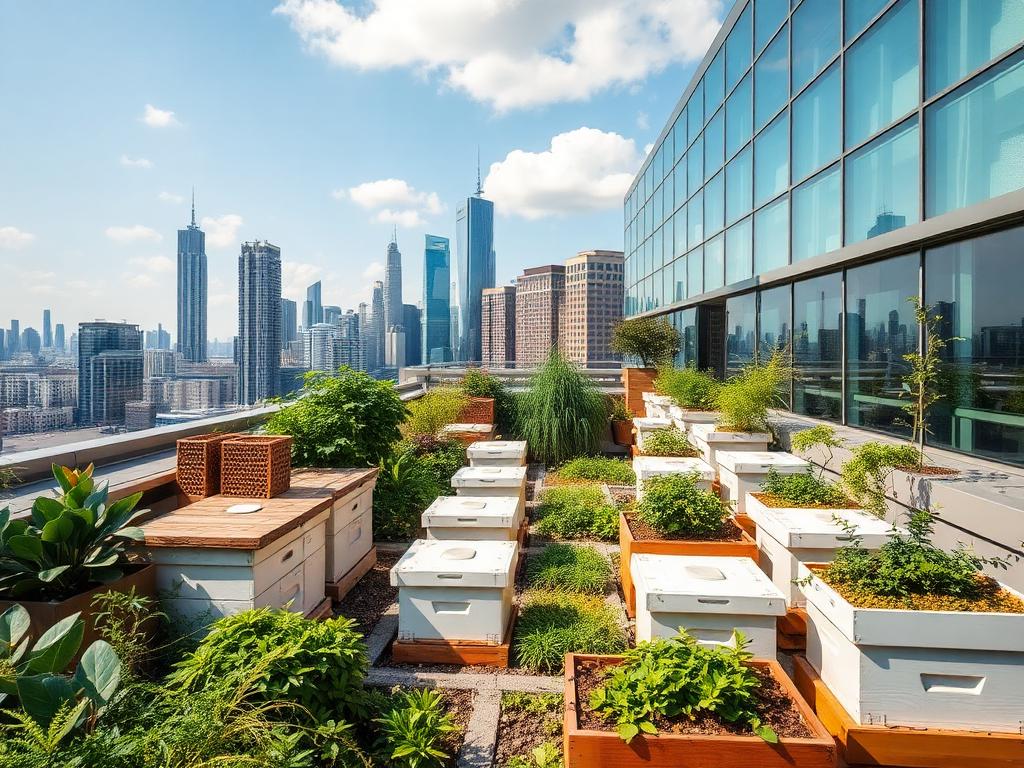


Why install a beehive at your company?
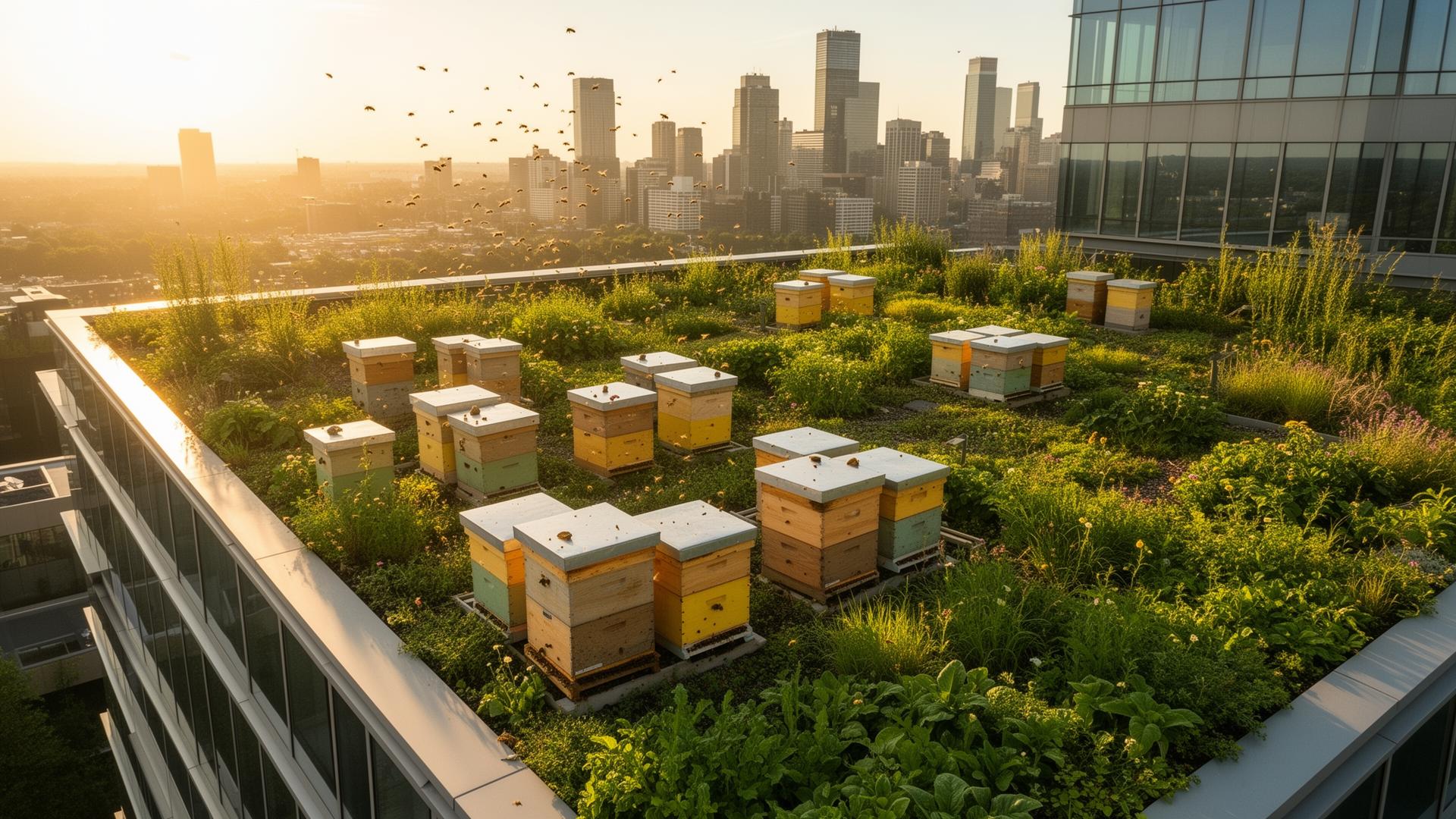
A corporate beehive is not just a decorative object on a rooftop. It is a living ecosystem that benefits the local environment, your company's image and the everyday life of your teams. Companies usually take the step for three main reasons.
Taking concrete action for biodiversity
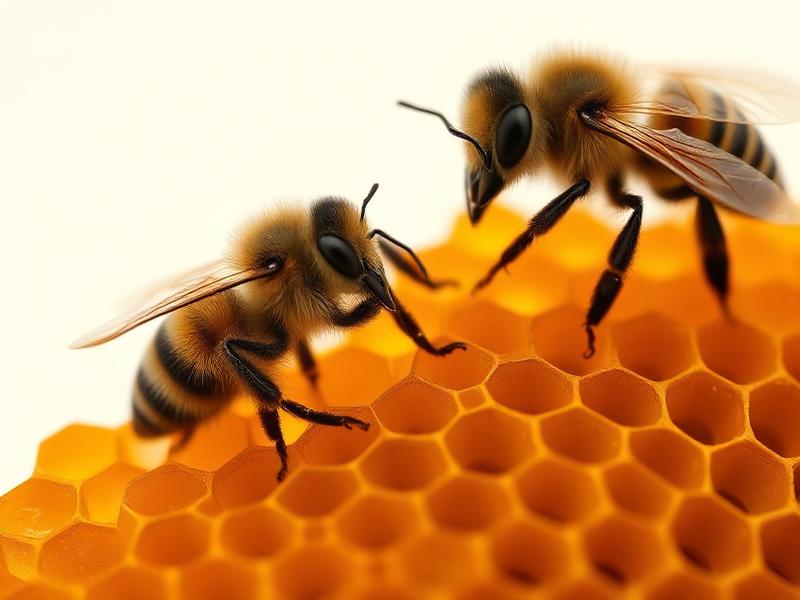
Bees and other pollinators play an essential role in the reproduction of a large share of flowering plants and food crops. Their populations are weakened by habitat loss, pesticides, parasites such as the varroa mite and predators such as the Asian hornet. By installing a beehive at your company, you provide a lasting home for a colony monitored by professional beekeepers and help pollinate the gardens, parks and green spaces around your premises, within a radius of several kilometres.
In cities, bees often find a very diverse flora: street trees, public parks, flowered balconies and private gardens. That is one reason urban beekeeping has grown so much in recent years, and why corporate beehives make sense both in city centres and in business parks.
Giving meaning to your CSR policy
Corporate social responsibility gains credibility when it rests on tangible, measurable actions. A corporate beehive is visible, easy for everyone to understand and produces a concrete result every year: your site's own honey. It fits naturally into a CSR report, non-financial reporting, a certification process or a workplace well-being policy.
Bringing your employees together
This is often the strongest and most unexpected effect. The hives become a topic of conversation, a shared source of pride and a reason for collective moments: apiary visits, harvests, tastings and workshops. Employees follow the life of "their" bees, ask questions and get involved. The project builds bonds between departments, sites and generations, and strengthens the sense of belonging.
Corporate beehive installation: how does a project work?
At Apiterra, installing beehives at your company follows a clear process with no surprises. You have nothing to manage: we take care of every step, from the initial study to the honey harvest.
1. On-site feasibility study, together with you
Everything starts with a visit to your site. An Apiterra beekeeper reviews the proposed location with you: access, sun exposure, wind protection, distance from walkways, nearby flowers and the safety of everyone involved. This feasibility study confirms that beehives can be installed in the best conditions for both bees and staff. A rooftop terrace, a garden, a green space or even a large balcony can work. A few square metres are enough.
2. Installing the hives
Once the location is approved, we install the hives, their stand and the necessary safety elements, then introduce the bee colonies. We favour bees known for their gentleness, suited to busy environments. Installation is carried out by our beekeepers, with no involvement from you and no disruption to your teams.
3. Year-round maintenance and health monitoring
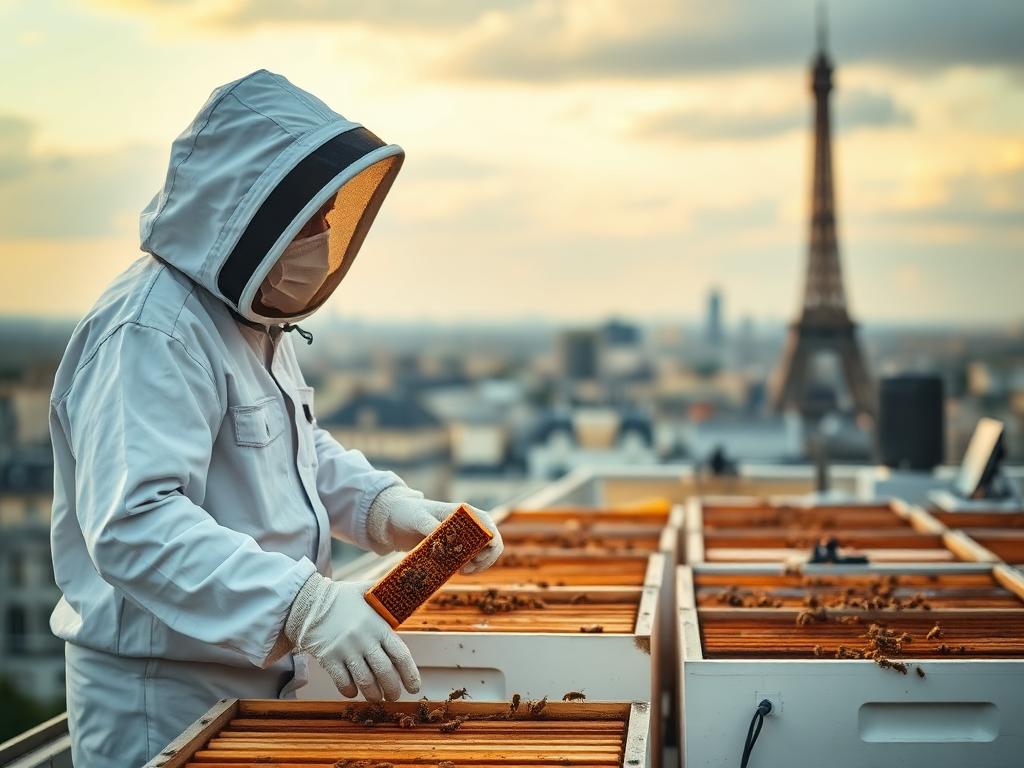
A corporate beehive needs regular professional care. Our beekeepers visit the hives throughout the season: colony health checks, varroa prevention and treatment, Asian hornet monitoring, swarm management, adding supers in spring and preparing for winter. Every visit is recorded in the apiary health register. Thanks to our partnership with INRAE and our collaboration with a veterinarian specialised in bee pathology, we apply best practices to ensure excellent care for your bees.
4. Harvesting and jarring the honey
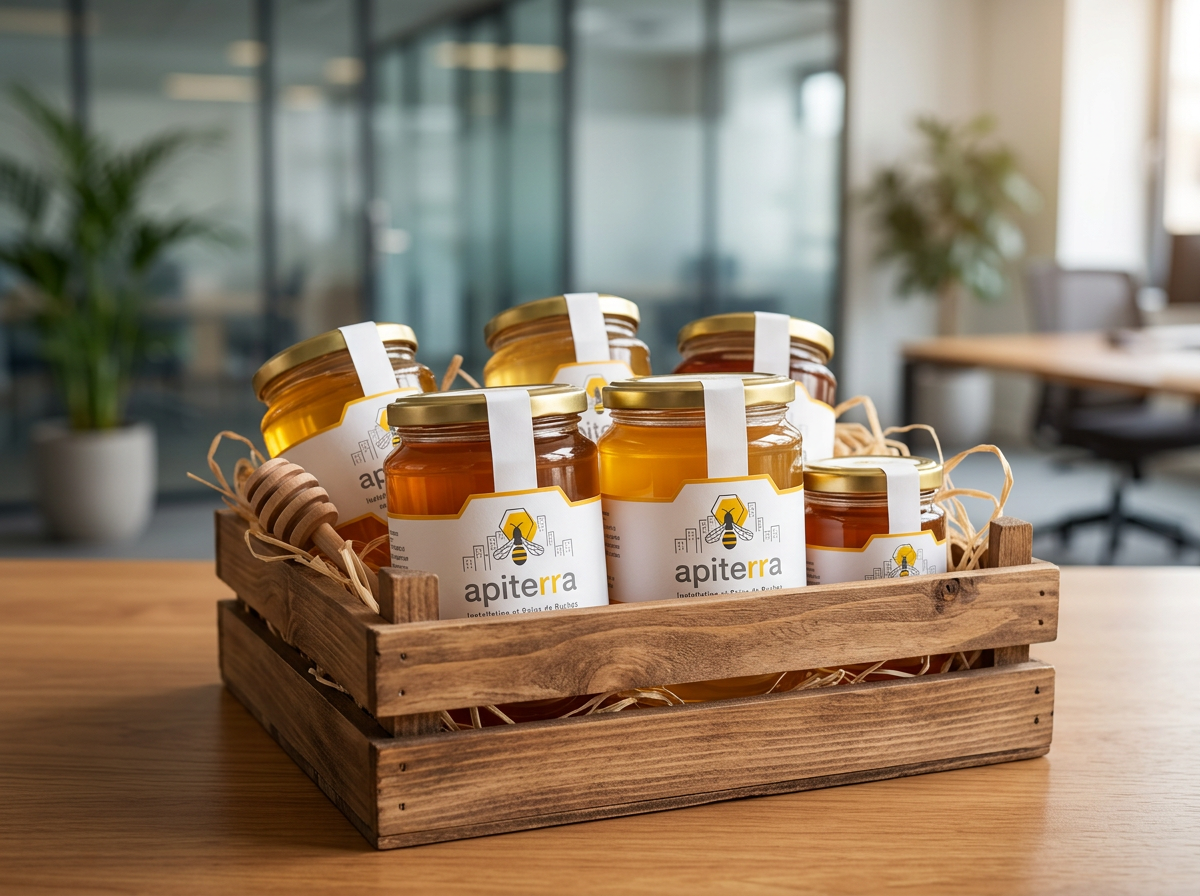
Each year, the honey produced by your hives is harvested, extracted and jarred. Depending on the weather, the location and the strength of the colony, one hive can produce roughly 70 to 200 jars of 150 g. Jars can be branded with your company's colours and offered in several sizes, including 40 g and 90 g, ideal for client gifts, seminars and internal events.
Is there any risk for employees?
This is the first question executives and facility managers ask, and it is a fair one. Apiterra's answer is clear: the project is designed to be risk-free for your staff.
Bees are not aggressive by nature: they are looking for flowers and only sting to defend their hive when they feel threatened. That is why the location is chosen carefully during the on-site feasibility study, away from walkways, opening windows and building entrances. Hives are positioned so that the bees' flight path rises quickly above people's heads.
All work on the hives is carried out exclusively by our trained and equipped professional beekeepers. During apiary visits and workshops, participants wear full protective suits and are supervised at all times. The bees we select are known for their gentleness. Your peace of mind is our priority, and it is why hundreds of companies trust us with their hives year after year.
What legal obligations apply to a corporate beehive?
Keeping beehives comes with several regulatory obligations. With Apiterra, you don't need to worry about them: we take on all legal and administrative obligations, freeing your company from any liability.
Insurance
Hives installed and maintained by Apiterra are covered by our professional liability insurance. The host company does not need to take out a specific policy.
Health register
Every visit, check and treatment is recorded in the apiary health register, as required by regulations, ensuring full traceability of your colonies' care.
Declaration to the authorities
Every beekeeper must declare their colonies each year. Apiterra handles this declaration and the related procedures with the relevant veterinary authorities (the DDPP in France).
Regulatory apiary signage
The apiary must be identified with compliant signage. We install it and can integrate it into a custom apiary sign in your colours.
A participatory initiative for all your employees
A corporate beehive is at its best when it is shared. Apiterra has developed several tools to involve every team, including those who don't work on the site where the hives are located.
Mobile tracking and care app
Launched in 2020, our mobile app lets every employee follow the life of their hives from their smartphone: beekeeper visits, care provided, colony development and harvests. Everyone can understand what happens inside the hive throughout the seasons and feel part of the project.
Real-time Apinews
Apinews are information notes about beekeeping and your hives, shared in real time. They feed your internal communication with positive, educational content: the role of bees, the stages of the season and how honey is made.
Workshops and beekeeping team building
Our workshops take place at your site or at Apiterra apiaries: discovering the hive in a beekeeper's suit, honey tastings, harvesting and extraction, educational activities for employees' children and biodiversity talks. They are popular, inclusive team moments that leave lasting memories.
Beekeeping training
For those who want to go further, Apiterra offers a full beekeeping course at our premises in Montreuil, near Paris, as well as immersive Api weekends.
Customise your apiary and showcase your commitment
A corporate apiary is also a powerful communication tool. Apiterra offers many customisation options: roll-up banners, hive roof stickers, custom apiary signs, Dibond panels, totems and a complete communication pack. Your hives become a visible marker of your identity and commitment for employees, visitors, clients and partners.
Honey from your hives, presented in jars with your branding, becomes an authentic, local business gift: end-of-year gifts, seminars, conventions, trade shows, onboarding, and even weddings and private events. Unlike standard promotional items, it tells a story: a real commitment to biodiversity, on your own site.
No space available? Beehive sponsorship
Not every company has a rooftop, garden or suitable area. Beehive sponsorship lets you help save bees without needing any space at your premises. Your hives are hosted at Apiterra apiaries, run by our beekeepers across France. You enjoy the same monitoring, the same communication tools and honey from your sponsored hives.
The benefits of a corporate beehive, beyond the honey
Honey is the most visible result of a corporate beehive, but it is far from the only one. Companies that work with Apiterra regularly highlight benefits across several areas of their organisation.
For the environment
Each colony contributes to pollinating the plants around your site, supporting local biodiversity in parks, gardens and green corridors. Because our beekeepers monitor colony health closely and size apiaries according to the available flowers, your hives are part of a balanced approach that respects wild pollinators as well as honeybees.
For your employer brand
Candidates increasingly look for employers whose values match their own. A corporate apiary, an app that lets everyone follow the hives and regular beekeeping workshops are concrete proof of your commitment. They give your HR and recruitment teams authentic stories to share on careers pages, social networks and during onboarding.
For workplace well-being
Spending time outdoors, learning something new and sharing a collective experience all contribute to well-being at work. Apiary visits and honey workshops offer a break from daily routines, encourage curiosity and create positive moments that employees remember and talk about long afterwards.
For your clients and partners
Showing visitors your rooftop hives or offering them a jar of honey produced on your own site makes a lasting impression. It opens conversations about your values and commitments in a natural, sincere way, far from traditional corporate messaging.
For your CSR reporting
A corporate beehive provides concrete indicators to include in your CSR reporting: number of hives, colonies monitored, honey harvested, employees involved in workshops and training. These elements make your commitment measurable and easy to communicate to stakeholders year after year.
A year in your company apiary
To understand what a corporate beehive involves, it helps to follow a colony through the seasons. Each period has its own challenges, and our beekeepers adapt their work accordingly.
Spring: the colony wakes up
As soon as the first mild days arrive, the queen resumes laying and the colony grows quickly. Bees forage on the first blossoms: willows, fruit trees, dandelions and horse chestnuts. This is when the beekeeper checks the colony's strength, confirms the queen is present, prevents swarming and adds the supers that will hold the honey. For your employees, it is the ideal time for a first apiary visit: activity is intense and spectacular.
Summer: the honey flow and harvest
Summer is the season of major blooms, especially in cities with lime trees and the many flowers of parks and gardens. Bees store nectar and turn it into honey. Harvesting usually takes place in late spring and summer, depending on the region and the weather. It is perfect for a workshop: uncapping frames, extracting and tasting freshly harvested honey. It is often the moment teams look forward to most.
Autumn: preparing for winter
After the harvest, the beekeeper makes sure the colony has enough reserves to survive the winter and applies varroa treatments. Monitoring for the Asian hornet, which is particularly active at this time of year, is stepped up. This care is critical for the colony's survival and is recorded in the health register.
Winter: the hive at rest
In winter, bees cluster around the queen to keep warm. Visits are kept to a minimum so as not to disturb the colony: external checks, weighing the hive and protecting it from bad weather. It is also the time to plan the next season and share the year's results with your employees through the app and the Apinews.
Questions to ask before installing beehives
How many hives should you install?
The number of hives depends on the available space, your goals and how many employees you want to involve. One or two hives are often enough to launch a unifying project, while large sites or multi-site groups can create several apiaries. The on-site feasibility study helps define the right size together, taking into account local flowers so as not to compete with wild pollinators.
Do you need the building owner's permission?
If you rent your offices, it is advisable to inform the owner or building manager and obtain their agreement, especially for a rooftop installation. We can support you by providing useful information about the project, safety and our guarantees.
How should you communicate internally?
The success of a corporate beehive depends largely on communication. We recommend announcing the project at installation, organising a first visit or workshop, then keeping it alive throughout the year with the app, the Apinews, custom signage and honey distribution. Our communication pack provides all the materials you need.
What happens to the harvested honey?
The honey belongs to your company. It can be given to employees, used as client gifts, served at events, offered in the staff restaurant or used for a charity initiative. Our range of jar sizes lets you adapt distribution to each use.
Can you combine several services?
Yes. Many clients combine on-site hives with sponsored hives at Apiterra apiaries, team-building workshops, training and branded honey gifts. This lets you involve teams on every site and build a consistent biodiversity programme over several years.
Why choose Apiterra for your corporate beehive?
Over 15 years of experience
Apiterra was founded in 2010 in Angers and moved to Montreuil in 2015. Since then, we have built recognised expertise in installing and maintaining corporate beehives, with more than 1,000 hives monitored, more than 250 clients and a presence in over 250 cities.
Scientific expertise
Our partnership with INRAE and our collaboration with a veterinarian specialised in bee pathology ground our practices in the latest scientific knowledge and ensure excellent care for every colony.
A turnkey solution
Feasibility study, installation, maintenance, legal and administrative obligations, harvest, jarring and communication: Apiterra takes care of everything. You enjoy the benefits with no management burden.
International coverage
We install and maintain corporate beehives in France, Belgium, Luxembourg and Switzerland, for headquarters, branches, industrial sites, hotels, public institutions and campuses.
Start your corporate beehive project
Would you like to install a beehive at your company, or do you have questions before deciding? The easiest way is to describe your project through our quote request form: type of site, available space, number of employees and goals. An Apiterra advisor will get back to you quickly to discuss your needs and arrange the on-site feasibility study. Every project is unique, so our prices are provided on quotation, based on the number of hives, the services chosen and the customisation required.
Whether you are an SME, a large group, a local authority or an institution, installing beehives with Apiterra means choosing a lasting, risk-free and deeply human commitment that serves both biodiversity and your teams.